
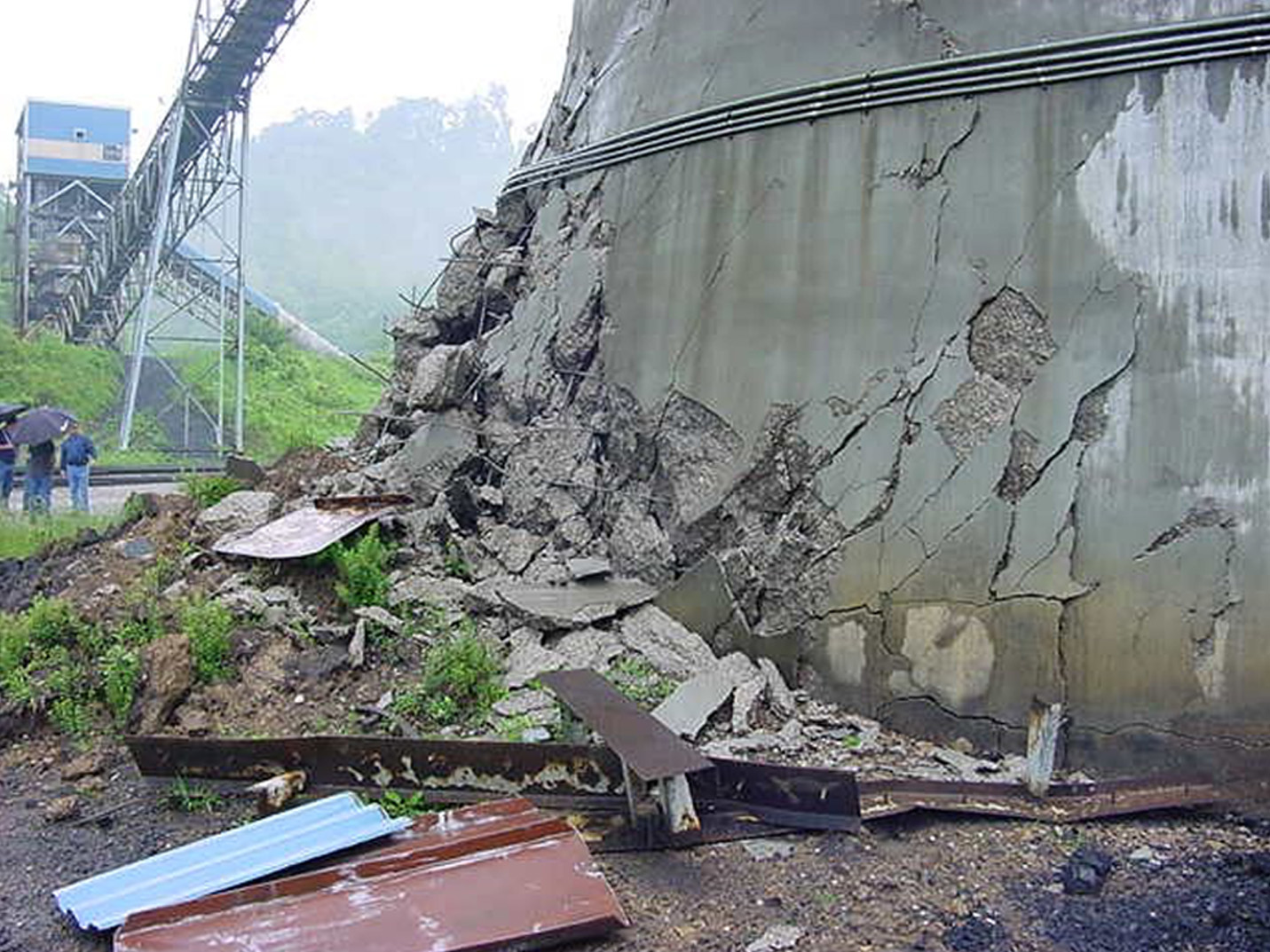
Silos are built to handle heavy loads and demanding industrial conditions, but even well-constructed structures can develop problems over time. Cracking, uneven material loads, foundation movement, and other issues can compromise a silo’s stability if left unaddressed.
Knowing what causes silo collapse and what warning signs to look for can help facility managers make informed maintenance decisions and reduce the risk of structural failure.
What Causes a Silo to Collapse?
Silo collapses can result from a combination of structural, operational, and maintenance-related issues. While every silo is different, several common conditions can increase the risk of structural failure.
Concrete Deterioration and Corrosion
Concrete silos are built for long-term durability, but exposure to moisture, weather, and stored materials can cause deterioration. Cracks, spalling, and corrosion of reinforcing steel can weaken structural components over time, making early identification and repair important.
Uneven Material Loading
Stored materials place significant pressure on silo walls, but that pressure isn’t always evenly distributed. Material buildup, blockages, and irregular discharge patterns can create concentrated loads that put additional stress on the structure.
Foundation Problems
A silo’s foundation supports the weight of the structure and its contents. Changes in soil conditions or uneven settlement can create additional stress, potentially leading to cracking, tilting, or other structural concerns.
Design and Construction Issues
Silos are engineered for specific storage capacities, materials, and operating conditions. Changes in use, construction deficiencies, or inadequate consideration of material flow can place additional stress on the structure.
Pressure and Ventilation Issues
Filling and emptying a silo can create changes in internal air pressure. Blocked or improperly maintained ventilation systems may allow excessive pressure or vacuum conditions to develop, potentially damaging silo roofs or walls.
Lack of Regular Maintenance
Small cracks, corrosion, and other signs of deterioration can worsen when left unaddressed. Without regular inspections and timely repairs, developing issues may eventually compromise a silo’s structural integrity.
Warning Signs of Potential Silo Structural Problems
Some structural problems develop gradually, and the warning signs aren’t always obvious. Facility managers should pay attention to changes such as:
- New or expanding cracks in concrete walls
- Spalling concrete or exposed reinforcing steel
- Visible corrosion or moisture intrusion
- Bulging, leaning, or other structural deformation
- Unusual material discharge patterns or recurring blockages
- Signs of foundation movement or uneven settlement
These conditions don’t necessarily mean a collapse is imminent, but they shouldn’t be ignored. A professional inspection can help determine the extent of the problem and whether repairs or additional evaluation are needed.
Reduce the Risk of Silo Collapse with Regular Inspections
Regular silo inspections help facility managers understand the condition of their structures, identify deterioration, and plan necessary maintenance. When concerns are found, engineering evaluations can help determine the appropriate repair or restoration approach.
For facilities looking to monitor changes over time, Marietta Silos also offers AI-powered inspections that use drone imagery and 3D modeling to document visible defects and support long-term maintenance planning.
Protect Your Silo’s Structural Integrity
Recognizing warning signs and maintaining a proactive inspection schedule can help reduce the risk of unexpected structural problems.
For more than a century, Marietta Silos has helped industrial facilities engineer, construct, inspect, and restore concrete silos. Whether you’re concerned about visible deterioration or planning your next inspection, our team can help you determine the right next steps.
Contact Marietta Silos to discuss your silo’s condition and inspection needs.