When planning a new storage silo, one of the first decisions you’ll make is choosing the right construction method. From material selection to construction techniques, each option offers unique advantages depending on your application, budget, and long-term operational goals.
At Marietta Silos, we specialize in engineering and constructing concrete silos using both Jumpform and Slipform methods, helping customers select the solution that delivers the best value over the life of the structure.
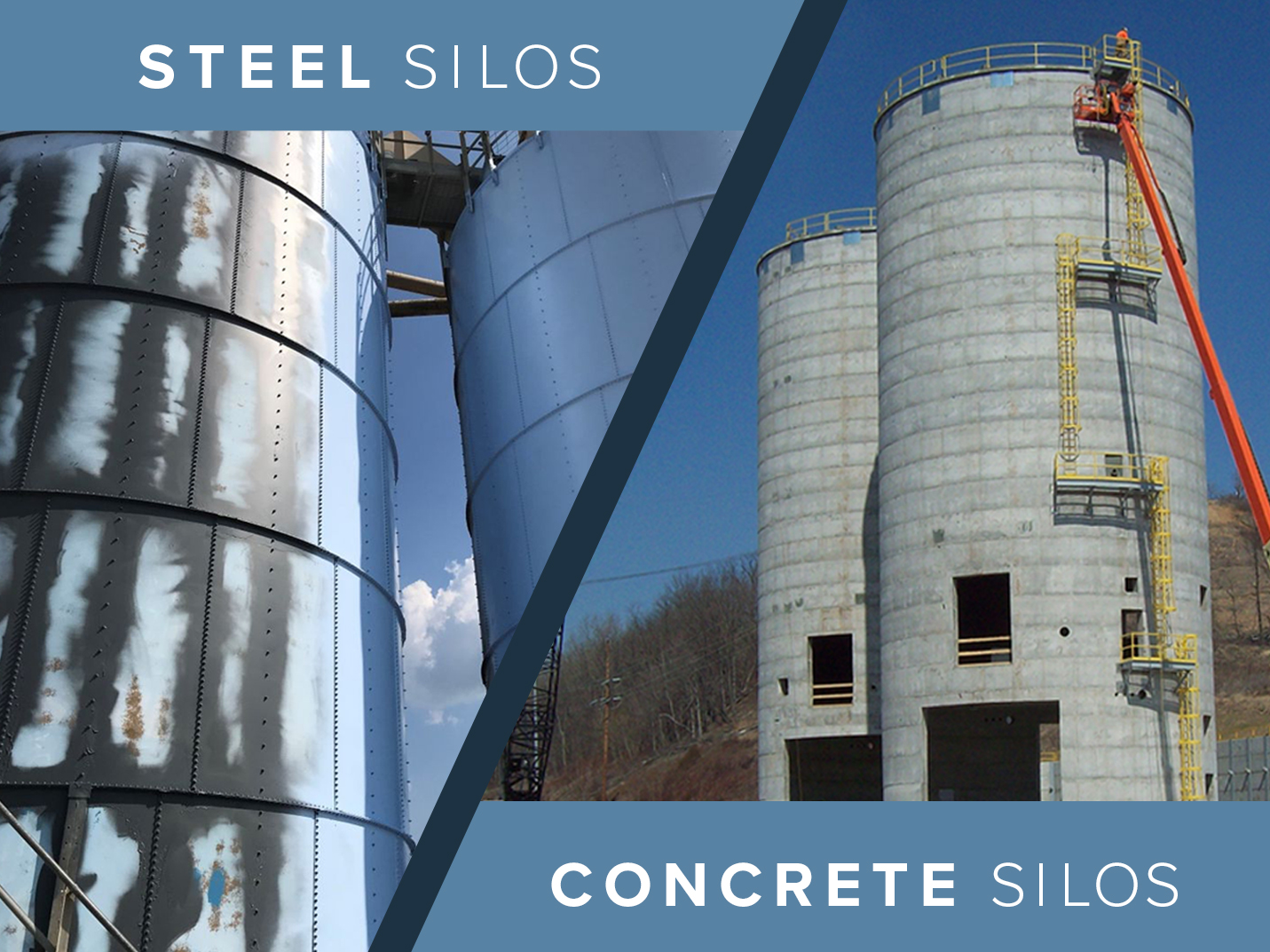
Concrete vs. Steel Silos
Both concrete and steel silos are used throughout industries such as cement, mining, power generation, aggregates, and manufacturing. However, for many industrial applications, reinforced concrete provides significant long-term advantages.
Concrete silos offer:
- Lower lifetime maintenance costs
- Excellent resistance to corrosion
- Superior durability in abrasive environments
- Reduced need for exterior painting or repairs
- The ability to perform many exterior repairs without emptying the silo
While steel silos may have a lower initial cost for some applications, ongoing maintenance and corrosion can increase the total cost of ownership over time. Concrete structures often provide greater long-term value and reliability.
Jumpform vs. Slipform Construction
Once you’ve chosen concrete, the next step is selecting the right construction method.
Jumpform Construction
Jumpform construction is ideal for many industrial silos and offers an economical, high-quality solution. The reusable forming system allows crews to pour concrete in controlled sections, providing additional opportunities for quality inspections throughout construction.
Marietta Silos is capable of constructing Jumpform silos up to 80 feet in diameter, providing an economical, high-quality solution for a wide range of industrial applications.
Slipform Construction
Slipform construction uses a continuous concrete pour, creating a seamless structure with a smooth exterior finish. Because the process requires crews to work around the clock until completion, it is commonly used for larger projects or facilities constructing multiple silos at the same time.
For very large-diameter silos, Slipform construction remains an excellent option.
Which Construction Method Is Right for Your Project?
Every storage application is different. Material characteristics, required storage capacity, discharge design, environmental conditions, and project schedule all play a role in determining the best construction approach.
That’s why Marietta Silos begins every project with engineering. Our team evaluates your operational requirements before recommending the silo type and construction method that best fits your facility’s long-term goals.
Partner with a Century of Experience
For more than 100 years, Marietta Silos has helped customers design, engineer, and construct storage solutions that stand the test of time. From engineering and construction to inspections, restoration, and cleaning, we provide complete lifecycle support for industrial silos.
Contact Marietta Silos today to discuss your next construction project and discover which solution is right for your facility.